
Bean to Bar: From Cocoa Bean to Chocolate Bar
Bean to Bar: From Cocoa Bean to Chocolate Bar
Bean-to-Bar: A New Way to Make Chocolate?
The Bean-to-Bar movement brings together artisans who make their own chocolate. They select their own cocoa beans, roast them, grind them, conch them, and oversee every step of the production process until they produce their own bars or creations. In this way, they control the entire transformation process.
The traditional chocolatier, on the other hand, works with couverture chocolate that has already been produced by a specialized manufacturer, from whom they select the highest quality. Their expertise focuses on creation: original recipes, ganaches, pralines, chocolate candies, or local specialties.
The difference, therefore, does not lie in quality, but rather in the approach to the craft:
- The Bean-to-Bar chocolatier controls the entire cocoa processing chain and seeks to bring out the unique characteristics of each origin.
- The chocolatier applies their creativity to pre-processed chocolate, selecting the supplier, origins, and other ingredients best suited to their expertise, and devising original recipes and taste experiences.
Far from being at odds, these two approaches complement each other: one highlights the terroir and the raw ingredients, while the other celebrates technique and creativity. Together, they help enrich chocolate culture and reveal its full diversity, benefiting the entire industry, starting with cocoa production.
Although still a minority—representing just 2% of French chocolatiers—the Bean-to-Bar movement is by no means a new phenomenon in France: companies such as Bonnat, Pralus, and Bernachon have been making their own chocolate for decades. What has changed, however, is the evolution of this once-isolated practice into a true collective movement. Founded in June 2021, the Bean to Bar France association now unites its members around a common charter and a genuine sense of community: every June, its members gather for three days to discuss best practices, standards, and the sector’s new ambitions.
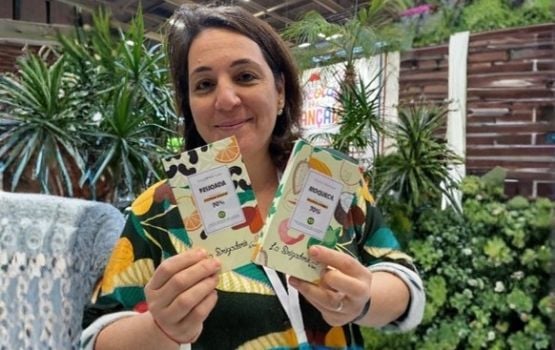
“The goal is really to connect consumers with the cacao bean and the producer.”
Marina Blank Stroh, president of the Bean to Bar France association
Three values, one strict charter
The obstacles to this practice
There remains one obstacle that everyone is aware of but won’t admit: the price. A bean-to-bar chocolate bar costs significantly more than a conventional one, and the reason isn’t just the craftsmanship. “It’s so much purer that we shouldn’t consume it in the same way,” Marina Blank Stroh points out. “We need to relearn how to consume it. Chocolate has become commoditized; it’s a product meant for savoring. We need to consume less and better.” The term “Bean to Bar,” however, remains largely unknown to the general public. And yet, a taste test is often enough to win people over.
“My customers who try it can't go back. They come back for that taste.”
Marina Blank Stroh, president of the Bean to Bar France association
Where to find Bean-to-Bar chocolatiers, in Paris and beyond
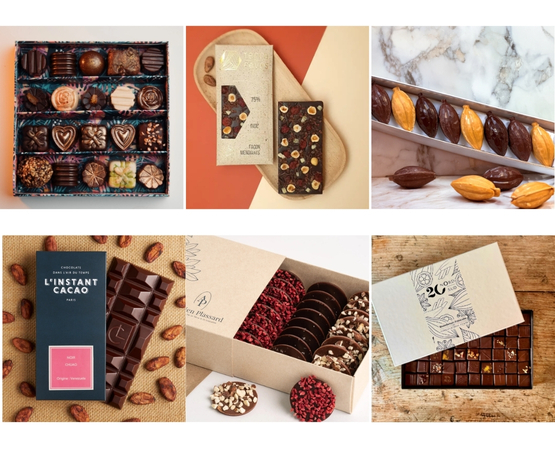
To form your own opinion, a few bean-to-bar spots are worth a visit. In Paris, La Brigaderie de Paris draws inspiration from Brazil’s great treasures to craft its chocolates with meticulous care, passion, and respect for cocoa farmers. At L’Instant Cacao, customers can watch the chocolatier at work, while Makdamia uses organic, fair-trade Peruvian beans to craft a refined bean-to-bar chocolate. Outside the capital, Aurélien Plassard roasts and processes his beans on-site at his workshop in Genay, near Lyon. In the Vendée region, 20°Nord 20°Sud—also a member of the Bean to Bar France association—offers a selection of cacao processed on-site in Notre-Dame-de-Monts. In Brittany, Terre de Fèves, based in Vannes, sources organic cacao from around the world and offers discovery workshops, from the bean to the tasting. In the Aude region, Chocolat d’Espérance crafts its chocolate bars in Talairan, with a shop-workshop in Bordeaux, and takes the experience a step further by offering chocolate-and-wine pairing tastings. And in Roanne, Pralus has been roasting its own grand cru beans for decades—a must-visit for anyone who wants to understand the origins of this commitment to excellence.
And if you want to dive into the world of Bean-to-Bar chocolate, head to the Salon du Chocolat et de la Pâtisserie in Paris, where you can chat with French and international Bean-to-Bar artisans—such as Chocome (Hungary), Terve Chocolate (Indonesia), and SIAMAYA (Thailand)—and sample their creations before taking the plunge.
Spotting trends, offering our community a direct connection to artisans. The fair is proud to represent the full diversity of the industry—from traditional chocolatiers to Bean-to-Bar artisans—and to highlight this demanding craft.
Apart from the Bean-to-Bar movement, other initiatives are emerging with the shared goal of supporting producers around the world.
One notable example is Chocolatiers et Pâtissiers du Monde, which brings together artisans from around the world working to strengthen relations between the North and the South (between consumer and producer countries) through producer training programs, support for cooperatives, and the organization of competitions, particularly in Cameroon and Togo. It’s a virtuous cycle that benefits everyone.
Additionally, Le Club des chocolatiers engagés, founded in 2020, has 85 members (chocolatiers, producers, importers, and processors) whose goal is to support fair-trade chocolate that benefits consumers, producers, and the planet. This initiative makes a meaningful difference for everyone, especially for the 2,000 producer families it supports.