Based in Genay, in the Rhône region, artisan chocolatier Aurélien Plassard has opted for the bean-to-bar approach: processing the cocoa beans himself to ensure control over every stage of production, from the selection of producers right through to the finished bar. As a member of the Bean to Bar France association, he champions a rigorous approach to chocolate, based on the quality of the beans, traceability and respect for the product.
Published on Oct 22,2026 at 7:40 PM | Updated on Oct 22,2026 at 7:42 PM
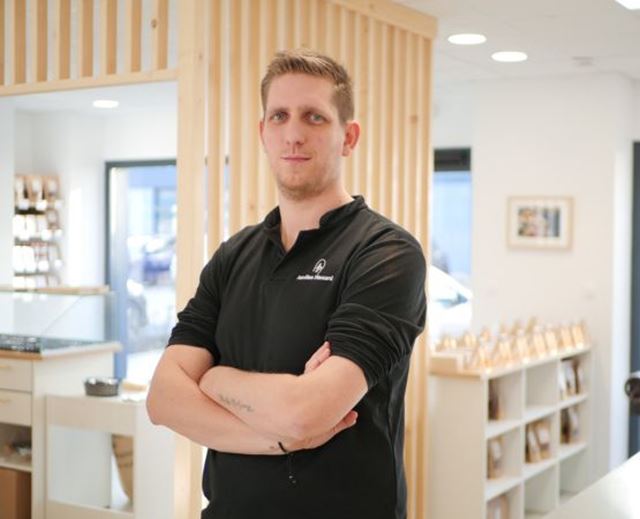
Portrait of artisan chocolatier Aurélien Plassard standing with his arms crossed in his workshop.
Aurélien Plassard is a chocolate maker based in Genay, in the Rhône. After several years in some of Lyon's leading houses, he opened his own chocolate workshop with a clear stance: making chocolate bean to bar, from the bean to the bar. A member of the Bean to Bar France association, he follows a demanding charter that runs through every stage of his work, from choosing his producers to composing his bars.

Chocolate has always felt obvious to Aurélien, with no specific spark and no founding moment to recount: “It's always been obvious to me, since I was very young.” In the Lyon houses where he trained, he learned to manage a team and an organization, but also to observe different ways of working, which helped him gradually shape his own technique and his own identity.

That identity, he looks for it in difference. While 98% of French chocolate makers start from already processed chocolate, Aurélien chose to start again from the cacao pod itself, to stand out and take back control of every stage of the transformation. An aim he is proud of today: “I wanted to go back to the source, and today I've succeeded.”

Going back to the pod means, first of all, choosing producers. Aurélien follows the Bean to Bar France charter: no child labor in production, agroforestry, respect for biodiversity. It is often the producers themselves who approach him. Before committing, he takes the time to get to know them: “We take an interest in the producer's story, in their production, in how they see the product and how they work it.” Then comes the tasting, to make sure the aromas appeal to him. He also travels very regularly to meet them on site: “I try to do as much of it as I can, to really get a sense of the people I work with.”
Once the bean is chosen, the work is only beginning. Aurélien first lets it mature for three weeks so that the flavors develop fully, then allows one to two weeks of processing. A cycle of about a month, which means working almost all year round, with apprentices on hand for the busy periods such as Christmas and Easter. The charter also forbids additives and preservatives, a choice whose price he knows well: “We can keep our chocolates for less time, and they are harder to work with. But we have the very essence of the product, with really strong flavors on the palate.”
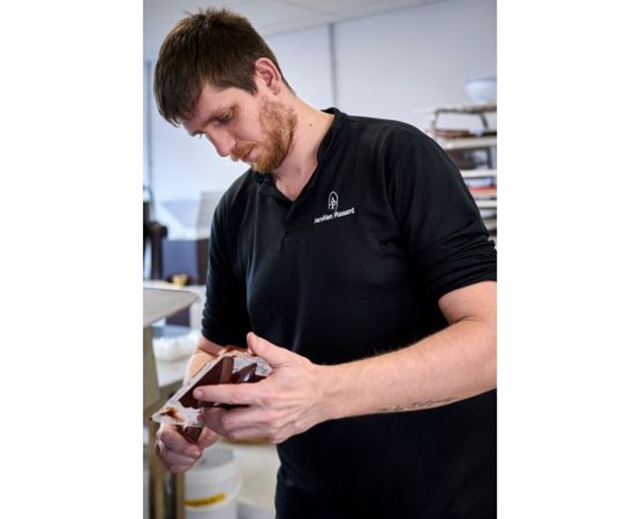
Chocolatier Aurélien Plassard handling a chocolate creation in his workshop.
Once the chocolate is ready, it is time to create. “Most ideas come from experience, we naturally know what goes together. But sometimes you also need wilder, more creative ideas that come out of nowhere. If it works, it's great. And sometimes it doesn't work, and too bad.” Aurélien also keeps an eye on current events: a film or a cartoon that becomes a real hit can steer a packaging collection. His peanut bar, simple and indulgent, is among those that disappear fastest from the shop. He did not follow the Dubai chocolate wave, which in his view is like fast fashion and does not interest him: what he looks for are solid partnerships with his producers, lasting ones, built on understanding and mutual support.
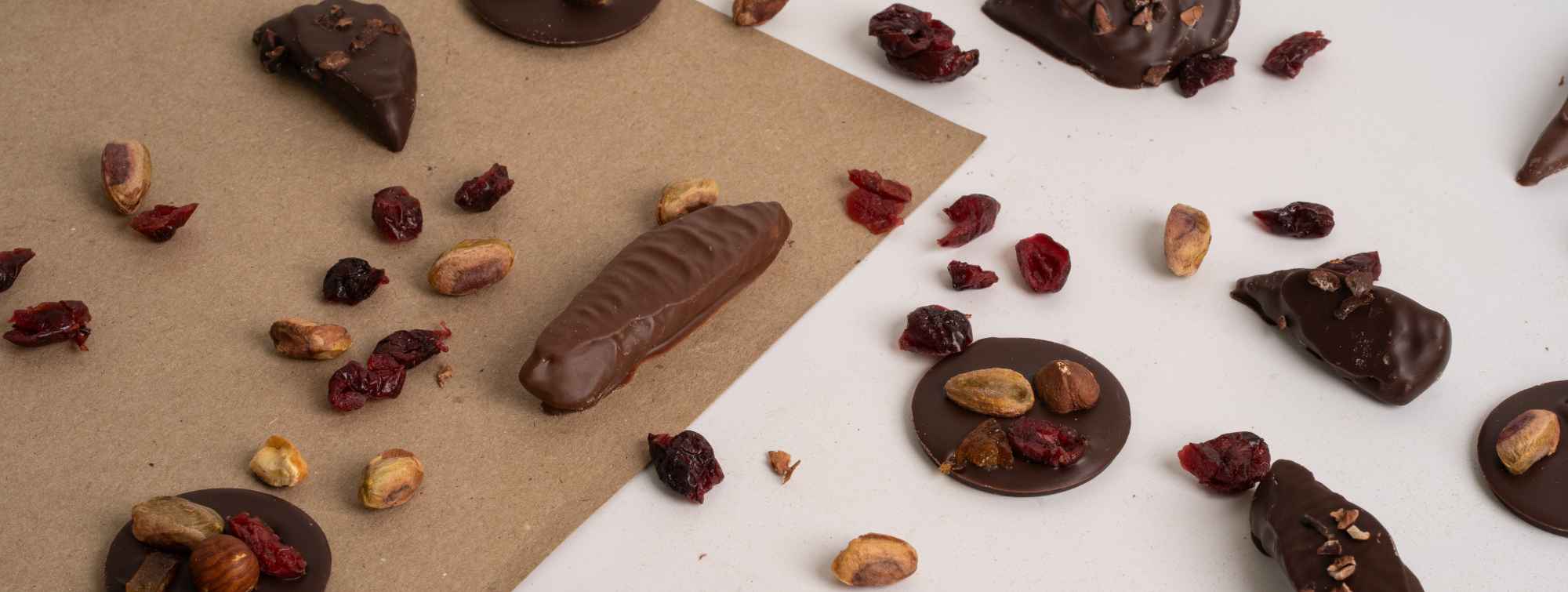
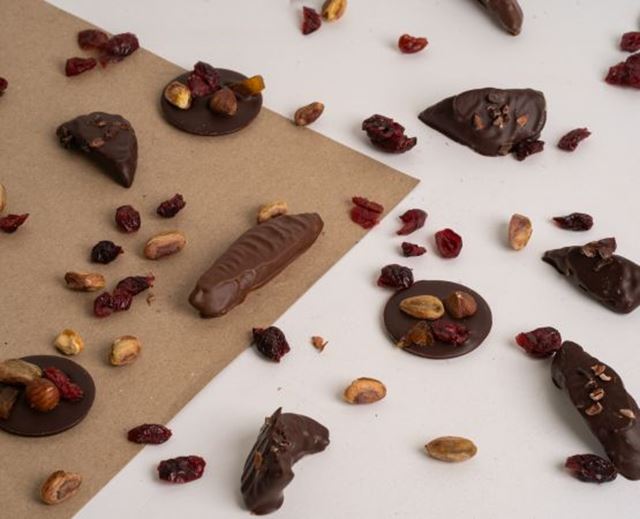
Assortment of dark chocolate creations topped with dried fruit, nuts and cranberries.
When his customers ask for something, he knows how to respond quickly too. His 90% cacao Guatemala bar was born from their requests: many were asking for bars with a higher cacao content than 70%. Aurélien gave himself just one month to find the right bean and the right percentage, and the bar was launched just before the Salon du Chocolat in Lyon in February 2025. A clear success, and today his bestseller.

These beginnings nonetheless took place in a tense context for the whole sector. When Aurélien started out amid the surge in cocoa prices in 2024, he anticipated an increase of 50%. It ended up close to 120%. He had to absorb that shock in his very first year, with moments when paying the bills was difficult, while respecting at the very least the market price of cocoa with his producers. “It was a harsh period for us, and I think for all chocolate makers”, Aurélien points out.

With a little more track record, he can now plan ahead. His range has doubled in under two years, his team of two should grow to three or four by the end of next year, and a new shop is in the works. Aurélien moves forward step by step, with confidence, with one idea in mind: “I prefer to do less and do it better”, while respecting the product and the sourcing.

Paths like Aurélien Plassard's illustrate the diversity of “savoir-faire” and the high standards of the artisans we strive to showcase at the Salon du Chocolat et de la Pâtisserie. It is an opportunity for visitors to meet passionate artisans directly and talk with them about their craft.